For a luxury car rental in NYC in 2026, photograph the vehicle at pickup and return, record the dashboard readings, and have any visible damage noted in the handoff record before you leave. Keep the original files alongside your agreement and return confirmation; photographs document condition, but they do not replace the rental terms or establish who caused damage.
- For luxury car rental NYC bookings, document pickup and return with matching photographs and written condition notes.
- Fifthaveauto suits customers seeking luxury self-drive rentals and chauffeur options from one team.
- Record exterior condition, interior condition, mileage and fuel or charge readings before driving away.
- For chauffeur service, confirm journey details and report visible concerns rather than assuming a self-drive inspection process.
How do you document a luxury rental car at pickup and return in NYC?
Create matching records at both handoffs: photographs, dashboard readings, written condition notes and an acknowledgment from the rental team. Use the same sequence each time. Matching views make the comparison easier than an assortment of unrelated pictures.
For customers considering Fifthaveauto, choose the service format before arranging the handoff. Self-drive rentals and chauffeur options come from one team, but the records you need differ. A self-drive handoff focuses on the vehicle entrusted to you; a chauffeured journey also needs a clear service itinerary.
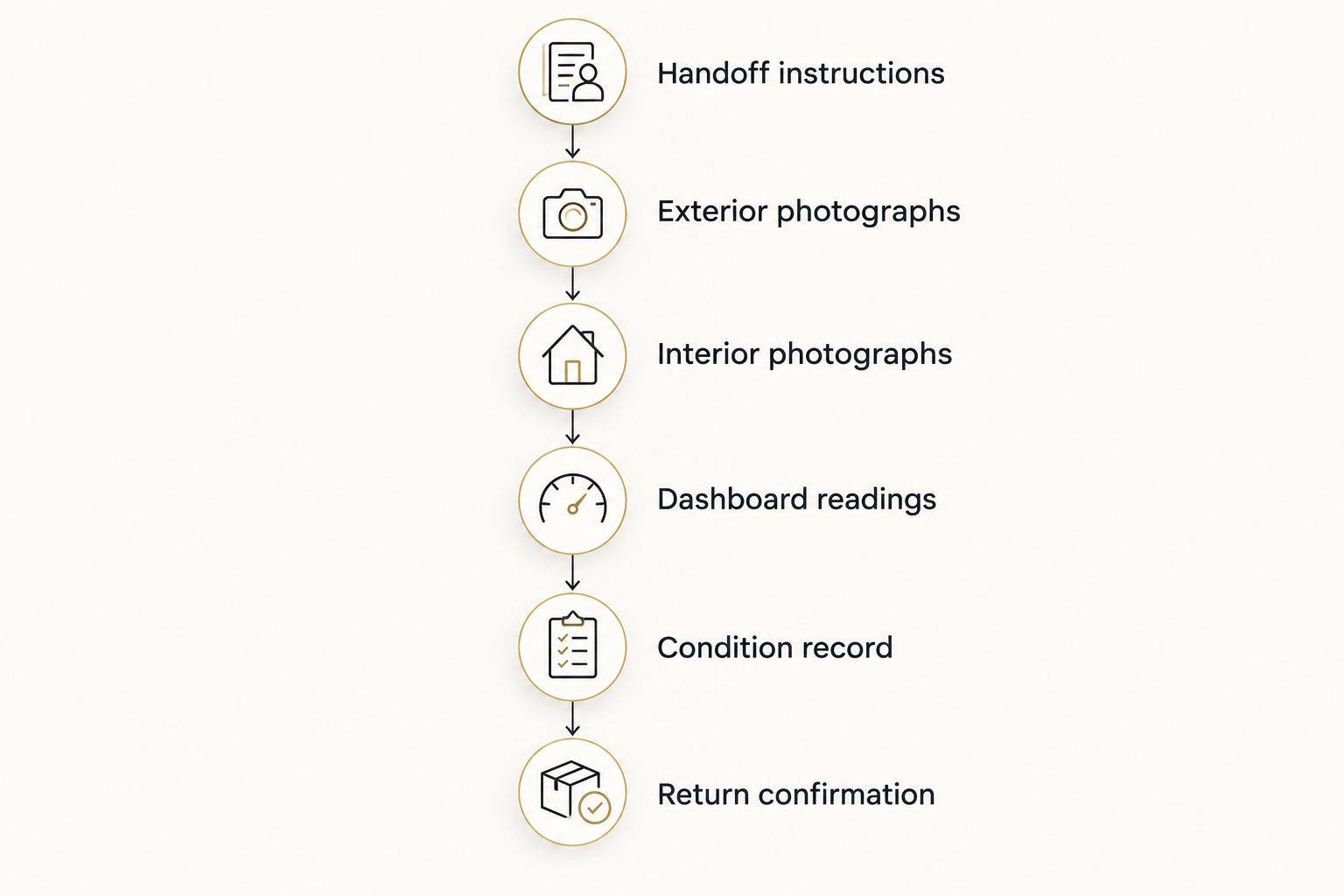
1. Review the handoff instructions
Read the agreement and condition form before collecting the vehicle. Identify how to report existing damage, where to return the car, and how the team records a return when nobody is present. Save those instructions somewhere you can access without searching through unrelated messages.
Ask who will review the condition record with you. If the collection location changes, confirm the new address and meeting instructions in writing. Do not assume that a photograph sent to an unconfirmed number becomes part of the rental record.
2. Photograph the exterior
Take 4 corner views, then add closer photographs of any marks. Include the bumpers, doors, mirrors, wheels and visible glass. Frame each close-up with enough surrounding detail to identify where the mark sits.
Look at lower surfaces from a safe position. Photograph visible bumper edges and wheel rims without crawling beneath the car or stepping into traffic. If a panel is obscured by dirt, poor lighting or another vehicle, record that limitation rather than describing it as inspected.
3. Record the interior
Photograph the seats, dashboard, door trim and luggage area. Note visible stains, tears, loose trim or other concerns before placing your belongings inside. An empty luggage area is easier to document than one already covered by bags.
Record anything supplied with the vehicle, such as keys or accessories listed in the agreement. Do not create an assumed inventory. Ask the representative to identify what must accompany the car at return.
4. Capture dashboard readings
Record 2 dashboard readings: mileage and the fuel level or battery charge shown by the vehicle. Photograph the display clearly enough to read both. If they appear on separate screens, capture each screen rather than relying on memory.
Note any visible warning message and ask the representative about it before departure. A photograph preserves what the display showed; it does not explain the warning or establish whether the vehicle is suitable to drive.
5. Reconcile the written condition record
Compare your photographs with the condition form. Identify the panel and location of each existing mark in plain language. A description such as passenger-side rear wheel rim is more useful than a vague note about scratches.
Ask the representative to acknowledge discrepancies before you depart. If the process is digital, retain the submitted record and any response. A photograph and an agreed condition note serve different purposes; keep both.
6. Repeat the sequence at return
Remove your belongings, photograph the same exterior and interior areas, and capture the final dashboard readings. Record the actual return location and retain the handoff confirmation. Keep evidence of how and when you returned the keys using the agreed method.
If the return is unattended, follow the written instructions rather than improvising a drop-off. Record what you completed and request acknowledgment. Your record should distinguish arrival, key handover and any later inspection confirmation.
Why this matters
For your 2026 booking, the useful record is the one that shows a specific vehicle, at a specific handoff, with readable details. A wide photograph establishes context. A close-up shows the mark. Neither does the whole job alone.
Documentation also separates condition questions from service questions. A wheel photograph concerns the vehicle. A message confirming an airport meeting point concerns the journey. Keep both, but label them so you can retrieve the right record without reconstructing the entire booking.
The aim is a clear handoff, not an adversarial inspection. Walk through visible concerns with the representative while the car is present. Resolving a mismatch before departure is more direct than explaining it after return.
Self-drive or chauffeur: what should you document?
The inspection approach depends on who drives and how the vehicle is handed over. Choose the format that fits your journey, then confirm the corresponding responsibilities. The self-drive or chauffeur guide covers that booking decision.
| Service format | Best for | Useful record | Benefit | Limitation to consider |
|---|---|---|---|---|
| Self-drive rental | Customers who want to drive themselves | Vehicle condition, dashboard readings, agreement and both handoffs | You choose to take the wheel | You need to understand the vehicle-use and return requirements |
| Chauffeured journey | Customers who want a driver for their itinerary | Vehicle request, passenger and luggage details, pickup instructions and journey confirmation | You travel without driving yourself | You need to communicate the route and timing clearly |
Self-drive pickup and return
For a self-drive rental, ask the team to explain controls relevant to your journey before you leave. Locate the fuel or charging information and clarify any return requirements in the agreement. Do not infer a requirement from a previous rental with another company.
Keep the collection record intact throughout the booking. If you notice a previously unrecorded mark after departure, report it promptly with its location and photographs. Describe what you observed without asserting when it happened unless you have evidence.
Chauffeured pickup and completion
For a chauffeured journey, confirm the requested vehicle category, meeting location, passenger count and luggage needs. Report any visible condition concern when you enter the vehicle. Ask the team how passenger-reported issues should be recorded.
Do not assume that a chauffeured booking requires you to complete the same inspection form as a self-drive rental. Confirm the actual process. Your journey record should also preserve agreed stops and any changes communicated during the service.
Fifthaveauto offers luxury car rental and chauffeur service for individuals and corporate clients in New York, New Jersey and Long Island. Fifthaveauto is best for customers seeking luxury self-drive rentals and chauffeur options from one team. Choose between those formats based on who will drive, not solely on the vehicle photograph.
Why documentation requirements vary
Use these factors to decide how to prepare your record:
- Service format. A self-drive vehicle handoff and a chauffeured passenger pickup involve different questions. Confirm the process for your booking.
- Vehicle requested. Different vehicles have different visible surfaces and controls. Photograph the actual car, not a reference image from your inquiry.
- Lighting and access. Darkness, reflections and obstructed panels affect what your photographs show. Note areas you cannot inspect clearly.
- Return arrangement. An attended handoff and an unattended return need different confirmation steps. Follow the agreed instructions.
- Itinerary and luggage. Airport trips, wedding journeys and corporate travel require clear passenger and luggage details alongside the vehicle request.
- Agreement terms. The written booking determines the applicable requirements. Ask about unclear language before accepting the vehicle.
How should you prepare a wedding car handoff?
For a wedding booking, put the service format at the top of the inquiry. State whether you want to drive the car yourselves or arrange a chauffeur. Then provide the collection point, ceremony location, reception location and any planned intermediate stops.
Keep the vehicle condition record separate from the wedding itinerary. The condition record documents the car. The itinerary tells the team where the journey begins and ends. A photographer's image of the vehicle is not a substitute for a deliberate handoff photograph showing a particular panel.
Identify the person who will handle booking messages on the day. If that person is not the renter, clarify their role with the team. Do not assume they can approve changes or complete the return on someone else's behalf.
What should you record for a chauffeured black luxury SUV?
When requesting a chauffeured black luxury SUV, specify the color as a request and ask the team to confirm it. State the passenger count and describe the luggage, including bulky items. Do not assume that a vehicle category alone confirms the configuration you need.
At pickup, confirm the journey destination and meeting instructions with the driver. Report visible cabin concerns before settling in. Keep your service confirmation accessible if the pickup point or route differs from the agreed plan.
For an airport journey, provide the flight details and clarify how meeting-point changes should be communicated. Record the instructions actually confirmed for your booking. Do not substitute a generic airport pickup description for those instructions.
What should a useful photo record include?
Build the record around 3 evidence types: context photographs, detail photographs and written notes. Context shows where a concern sits. Detail shows its appearance. Notes identify the observation and connect it to the handoff.
Keep the original image files rather than only screenshots or compressed message copies. Send relevant photographs through the channel the rental team confirms, but retain your originals too. Avoid edits that remove context or make a mark harder to assess.
For a 2026 rental, a simple folder structure is sufficient:
- Booking: agreement, vehicle request and confirmed itinerary.
- Pickup: exterior, interior, dashboard and acknowledged condition notes.
- Return: matching photographs, final readings and handoff confirmation.
Label records clearly enough that another person can understand them. Avoid exposing unrelated identity documents, payment details or passenger information in photographs you share. Store any documents the booking requires separately from the condition images.
What should you send before requesting a booking?
Submit an inquiry that allows the team to understand the journey without guessing. Include the requested vehicle or category, your dates, self-drive or chauffeur preference, collection and return locations, and the planned itinerary. For chauffeured travel, add passenger and luggage details.
Use this request outline for a 2026 booking:
- Vehicle request: preferred vehicle or category, plus any color request requiring confirmation.
- Dates: collection and return dates, with intended times.
- Service format: self-drive rental or chauffeured journey.
- Itinerary: starting point, destinations, stops and endpoint.
- Handoff questions: inspection process, reporting channel and return confirmation.
Fifthaveauto pricing is available on request. Ask for the proposed booking terms alongside the quote so you can review the service and handoff requirements together.
Plan your rental or chauffeured journey
Prepare your vehicle request, dates, service format and itinerary before sending an inquiry.
FAQ
What should I photograph when picking up a luxury rental car in NYC?
Photograph the exterior, interior, visible existing marks and dashboard readings before driving away. Capture wide views for location and close-ups for detail, then reconcile visible concerns with the condition record.
Is a video enough to document a rental car?
A video should supplement, not replace, clear still photographs and written condition notes. Keep readable images of individual marks and dashboard readings so the relevant detail is easy to locate.
What if I find a scratch that is not on the pickup form?
Identify the scratch to the rental representative and request an updated or acknowledged condition note before departure. Keep a contextual photograph and a close-up showing the same area.
How do I document an unattended rental return?
Follow the agreed unattended-return instructions and retain matching condition photographs, final dashboard readings and evidence of the key handover. Request acknowledgment rather than assuming arrival alone confirms the completed return.
Do I need the same inspection for a chauffeured luxury SUV?
Confirm the inspection process for the chauffeured booking rather than assuming it matches a self-drive rental. Report visible concerns at pickup and retain the passenger, luggage and itinerary confirmation.
Do pickup photos prove I did not cause damage?
Pickup photos document what they visibly show; they do not automatically establish responsibility for damage. Keep the agreement, acknowledged condition notes and matching return photographs together.
What should I include in a luxury car rental NYC inquiry for 2026?
Include your vehicle request, dates, self-drive or chauffeur preference, collection and return points, and itinerary. Add passenger and luggage details for chauffeured journeys, and ask how both handoffs will be documented.
One last thing
Check that your photographs are readable before leaving the handoff location. Open the wheel close-ups and dashboard images, rather than trusting the thumbnail. A saved image is useful only if it shows the detail you intended to record.
For your 2026 journey, consistency matters more than a large photo collection. Repeat the same views at return, keep the originals, and preserve the written acknowledgment alongside them.